
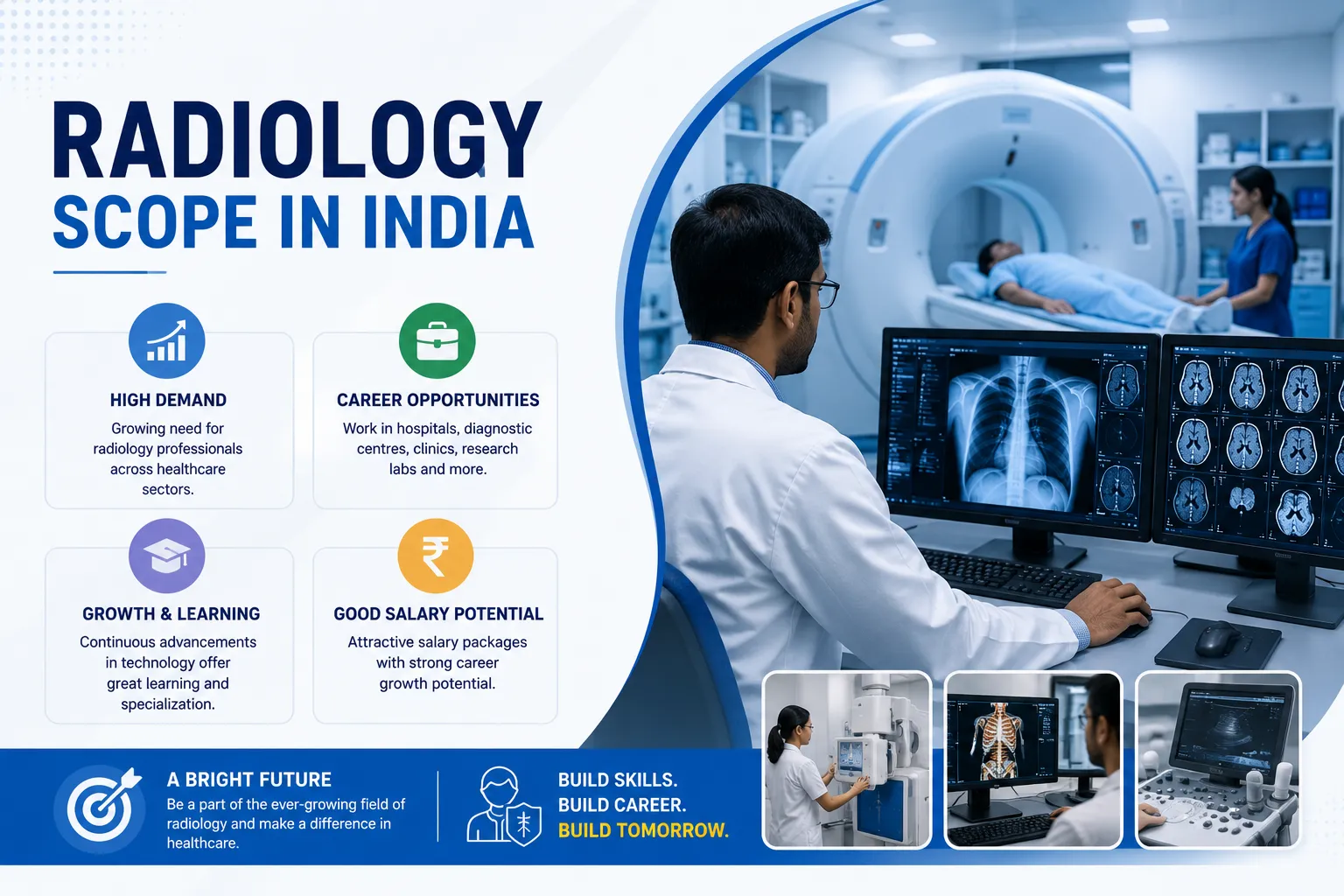
When I told my relatives I was getting into radiology, most of them assumed I meant becoming a doctor who reads X-rays. It took me a while to explain that radiology as a field is much bigger than that, and that there's an entire career path for people like me who train as imaging technologists, operating the machines, positioning patients, and making sure the scans doctors rely on actually come out clear and usable.
A year into my training and early clinical exposure, I want to share what I've genuinely observed about the radiology scope in India, not the polished version you find on college websites, but what it actually looks like from inside a diagnostic centre.
What People Get Wrong About Radiology as a Career
The confusion between "radiologist" and "radiographer" trips up almost every beginner, including me at first. A radiologist is a doctor, someone with an MBBS followed by an MD or DNB in radiodiagnosis, who interprets scans and gives medical opinions. That path takes close to a decade of study after school.
What most students like me actually enter is the radiography or medical imaging technology route, learning to operate X-ray machines, CT scanners, MRI units, and ultrasound equipment. We're the ones physically conducting the scan before a radiologist reviews it. It's a shorter path, usually a diploma or a bachelor's degree, and it opens up a career much faster while still keeping you right at the centre of diagnostic medicine.
Why the Scope of Radiology in India Is Actually Growing
I didn't fully appreciate this until I started my clinical rotations. Every single patient who walks into a hospital for anything beyond a minor complaint ends up needing some form of imaging at some point, an X-ray for a fracture, a CT scan for internal injuries, an ultrasound during pregnancy, or an MRI for something more complex. Diagnostic imaging isn't optional anymore in modern healthcare, it's the first step in almost every serious diagnosis.
A few things I've noticed that are genuinely pushing demand up:
- Diagnostic centres are opening up even in smaller tier 2 and tier 3 cities, not just metros
- Hospitals are running scans around the clock now, which means more shifts and more technologists needed
- Health insurance coverage has expanded, so more people are actually getting scans done instead of skipping them due to cost
- New imaging technology keeps getting introduced, which means the field constantly needs trained hands who know how to operate updated equipment
During my internship days, I noticed the imaging department was almost never idle. There's always a queue, whether it's routine X-rays or more urgent CT requests from the emergency ward.
Career Options Within Radiology
This surprised me the most when I started exploring the field seriously. Radiology isn't just one job title, there's actually a decent spread of roles you can grow into:
- X-ray Technician, usually the entry point for many after a diploma
- Radiographer or Radiology Technologist, handling a broader range of imaging equipment
- CT and MRI Technologist, a more specialised role that usually needs additional training
- Sonographer, focused specifically on ultrasound imaging
- Radiology Department Supervisor, for those who move into managing a diagnostic unit after years of experience
- Teleradiology support roles, which have grown since remote reporting became more common
I've seen seniors from my institute already working as X-ray technicians while continuing further studies part-time to move into CT or MRI specialisation later. The field genuinely lets you climb without needing to start from scratch each time.
What the Salary Actually Looks Like
I'll be honest, salary numbers online vary wildly depending on which source you check, and it's easy to get either overly excited or discouraged by cherry-picked figures. From what I've gathered talking to working technologists and supervisors at the centre where I trained, entry-level radiographers and technicians in India generally start somewhere in a modest range, and it climbs steadily with experience, specialisation, and the type of employer.
Government hospital positions tend to offer more stability and structured pay scales, while private diagnostic chains sometimes pay a bit more upfront but with less job security in comparison. Specialised roles like CT or MRI technologists, and definitely sonographers, tend to earn noticeably more than a general X-ray technician once you factor in a few years of hands-on experience. Location matters too, metro cities generally pay more than smaller towns, though the cost of living difference evens things out somewhat.
How I'm Building My Own Path
Coming from a smaller town, I couldn't always attend every practical session in person during the first few months, especially before I relocated closer to my institute. What actually helped was supplementing my theory portions through structured online learning, which let me revise imaging concepts and equipment basics at my own pace before stepping into the actual lab sessions. It's not a replacement for hands-on training, nothing really is in this field, but it made the transition into practical classes noticeably smoother for me.
If you're finishing 12th and considering this field seriously, it's worth properly comparing your entry options rather than jumping into the first course you find. There are a few solid courses after 12th that combine structured academic learning with practical imaging training, which is honestly a better long-term setup than a short-term certificate if you're serious about growing in this field.
Is There Room to Grow Further
This is something I ask my seniors about constantly, because I don't want to hit a ceiling a few years in. From what I've seen, the field does open up further if you're willing to keep studying. A good number of technologists move on to more advanced qualifications after a few years of practical experience, which helps them move into specialised imaging roles, teaching positions, or supervisory roles within larger diagnostic setups. If that's the direction you're eventually aiming for, it's worth looking into options for higher studies once you've got a bachelor's level qualification and some real clinical exposure under your belt.
What I'd Tell Someone Just Starting Out
If I could go back a year and tell myself something useful, it would be this. Don't underestimate how much the practical, hands-on portion of this course matters. Theory gets you through exams, but confidence around actual patients and actual machines only comes from repeated practical exposure. Also, don't assume every institute offers the same quality of clinical training just because the syllabus looks similar on paper. Ask about internship tie-ups with hospitals before you commit to a college, because that's genuinely where the real learning happens.
Conclusion
A year ago, I only had a vague idea of what radiology as a career actually meant. Now, having spent real time around imaging equipment and diagnostic teams, I can say the scope of radiology in India is genuinely wide, not just for doctors, but for technologists and technicians who form the backbone of every diagnostic department. If you're considering this path, take the practical training seriously, ask the right questions before choosing your institute, and don't be afraid to keep studying further once you've got some real experience behind you. The field rewards people who stay curious and keep upgrading their skills.