
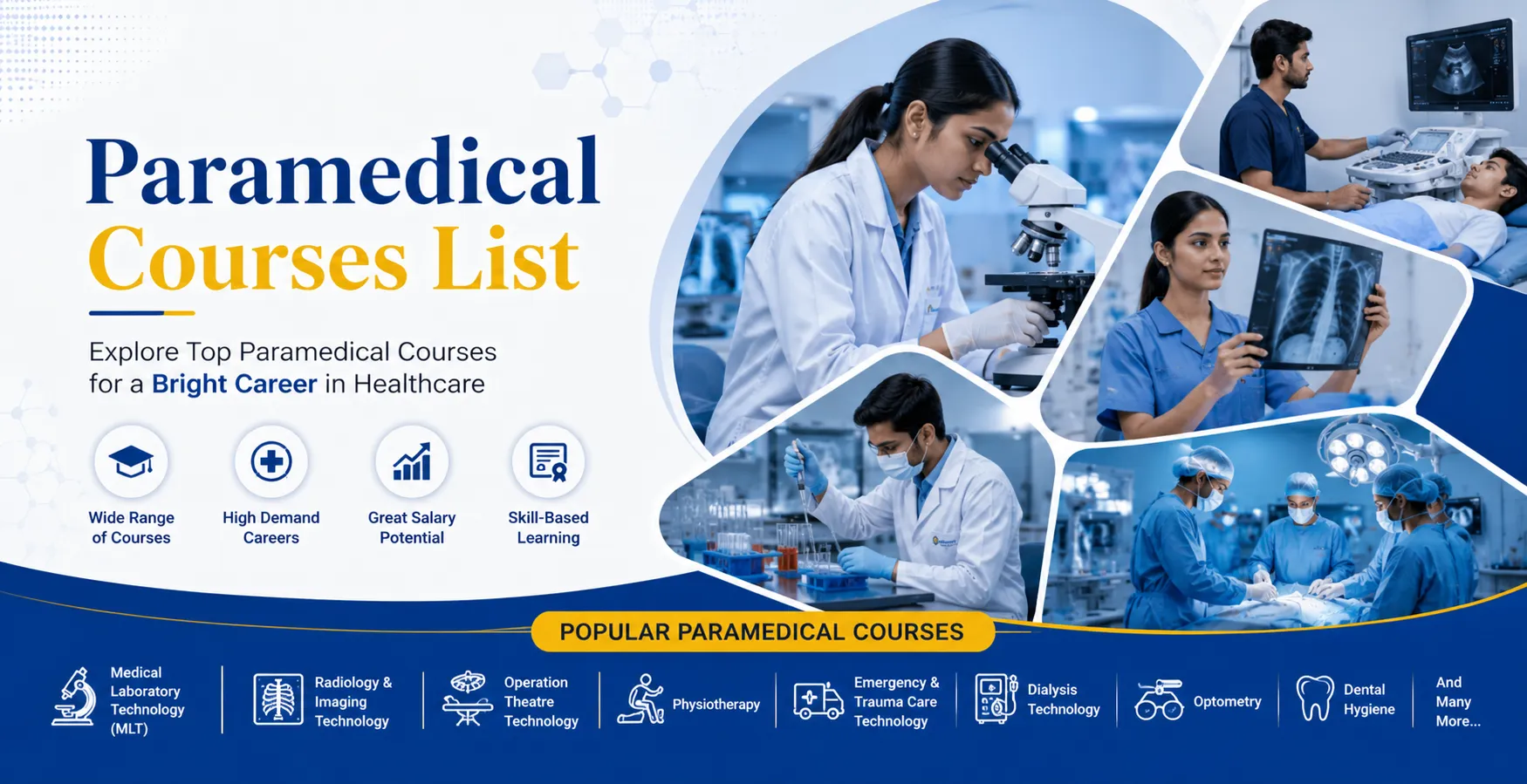
The healthcare sector in India is growing at a pace that few other industries can match. Hospitals and diagnostic centers and clinics across the country are constantly on the lookout for trained support staff who can work alongside doctors and nurses. This is exactly where paramedical education fits in. A well planned paramedical courses list opens the door to dozens of career paths that are shorter in duration compared to MBBS or nursing degrees yet still offer strong job security and steady income. Whether a student has just cleared 10th grade or is about to finish 12th grade there is a paramedical program suited to their academic background and career goals.
This guide walks through the full range of paramedical courses available today and explains how students can choose the right one based on their qualification and interest.
What Are Paramedical Courses
Paramedical courses train students to become skilled healthcare professionals who support doctors in diagnosis treatment and patient care. These professionals are not doctors themselves but they are just as essential to the functioning of any hospital or clinic. Lab technicians radiology assistants operation theatre technicians physiotherapy assistants and dialysis technicians all fall under this umbrella. The field is broad and it keeps expanding as medical technology advances and hospitals need more specialized hands on deck.
Paramedical education is offered at three levels. There are certificate programs that last a few months and are meant for quick skill building. There are diploma programs that usually run for one to two years and are the most popular choice among students. And there are bachelor degree programs that take three to four years and lead to more advanced roles with higher starting salaries.
All Paramedical Courses List
When people search for an all paramedical courses list they are usually trying to understand the complete spread of specializations available so they can compare and pick the one that matches their interest. Some of the widely recognized paramedical fields include the following.
Medical Laboratory Technology trains students to collect and test blood urine and tissue samples and this remains one of the most in demand paramedical careers because every hospital and diagnostic lab needs qualified lab technicians.
Radiology and Imaging Technology teaches students to operate X ray CT scan and MRI machines. This field has grown rapidly because imaging diagnostics are now a standard part of almost every medical treatment plan.
Operation Theatre Technology prepares students to assist surgeons during operations by managing surgical instruments and maintaining a sterile environment. Hospitals rely heavily on trained OT technicians for smooth surgical procedures.
Dialysis Technology focuses on operating dialysis machines and caring for patients suffering from kidney related conditions. With lifestyle diseases on the rise this specialization has seen consistent demand.
Physiotherapy Assistant courses train students to support physiotherapists in helping patients recover mobility after injury surgery or illness.
Anesthesia Technology covers the skills needed to assist anesthesiologists before during and after surgical procedures.
Cardiac Care Technology prepares students to work in cardiology departments and assist in procedures such as ECG monitoring and cath lab support.
Optometry trains students to test vision and assist in the diagnosis and management of eye conditions alongside ophthalmologists.
Emergency Medical Technology or EMT courses focus on providing first response care during emergencies and are ideal for students interested in ambulance and trauma care services.
Medical Record Technology teaches students to manage patient records and hospital documentation which has become increasingly important as hospitals move toward digital record keeping.
This is just a snapshot and the actual number of specializations available across colleges is much larger. Students interested in studying closer to the capital region can also explore paramedical courses in delhi ncr where several reputed institutes offer both diploma and degree level programs with strong hospital tie ups for practical training.
After 10th Medical Courses List
Not every student wants to wait until after 12th grade to start their healthcare journey. For those who want an early start there is a solid after 10th medical courses list that includes short duration certificate programs. These courses are designed for students who have completed their 10th board exams and want to gain a healthcare related skill quickly so they can either start working sooner or continue their studies later with an added advantage.
Popular options at this stage include certificate courses in nursing assistance home health aide training basic lab assistance and hospital front office management. These programs typically last between six months and one year and focus heavily on practical training. They are a great fit for students from smaller towns or those who cannot afford a long degree program right away but still want to build a career in the medical support field. For a detailed breakdown of what is available at this level students can check the full after 10th medical courses list which covers eligibility criteria course duration and career scope for each option.
After 12th Paramedical Courses List
The largest and most popular segment of paramedical education belongs to students who have completed their 12th grade especially those from a science background with physics chemistry and biology. The after 12th paramedical courses list is much wider and includes both diploma and bachelor degree programs.
At this stage students can pursue a Diploma in Medical Laboratory Technology a Diploma in Radiology and Imaging Technology a Diploma in Operation Theatre Technology or move directly into a Bachelor of Science in these same specializations. Degree programs generally offer better long term career growth and higher starting packages compared to diploma programs though diplomas remain attractive because of their shorter duration and lower fees.
Students who are unsure whether to choose a diploma or a degree should think about their long term goals. If quick entry into the workforce is the priority a diploma makes more sense. If the goal is to eventually take on supervisory roles or pursue further specialization a bachelor degree is the smarter investment. A complete and updated paramedical courses after 12th breakdown is available for students who want to compare every option side by side before making a final decision.
Career Scope After Paramedical Courses
One of the biggest reasons students choose paramedical education is the strong and consistent demand for trained professionals. Government hospitals private hospitals diagnostic chains nursing homes and even research laboratories are constantly hiring paramedical staff. Many graduates also find opportunities abroad since the skills taught in these programs are recognized internationally with additional certification.
Starting salaries vary depending on the specialization and the type of employer but paramedical professionals generally see steady salary growth as they gain experience. Many technicians move into supervisory or training roles within a few years and some go on to open their own diagnostic centers or clinics after gaining sufficient industry exposure.
How to Choose the Right Paramedical Course
Choosing from such a long paramedical courses list can feel overwhelming at first. The best approach is to start by identifying personal interest. Someone who enjoys working directly with patients might lean toward physiotherapy assistance or emergency medical technology while someone who prefers lab based work might find medical laboratory technology more suitable.
Next students should consider their academic background and eligibility since some bachelor programs require a science stream in 12th grade while diploma and certificate programs often have more flexible entry requirements. Location and college reputation also matter a great deal since hands on clinical training and hospital exposure during the course directly affect job readiness after graduation. Choosing an institute with strong hospital affiliations and updated lab equipment can make a noticeable difference in placement outcomes.
Conclusion
Paramedical education offers one of the most practical and reliable paths into the healthcare industry today. With options ranging from short certificate programs right after 10th grade to full bachelor degrees after 12th grade there is something for every student regardless of their starting point. Taking time to research the full paramedical courses list understanding eligibility for each program and choosing a college with strong practical training can set the foundation for a rewarding and stable career in healthcare.