
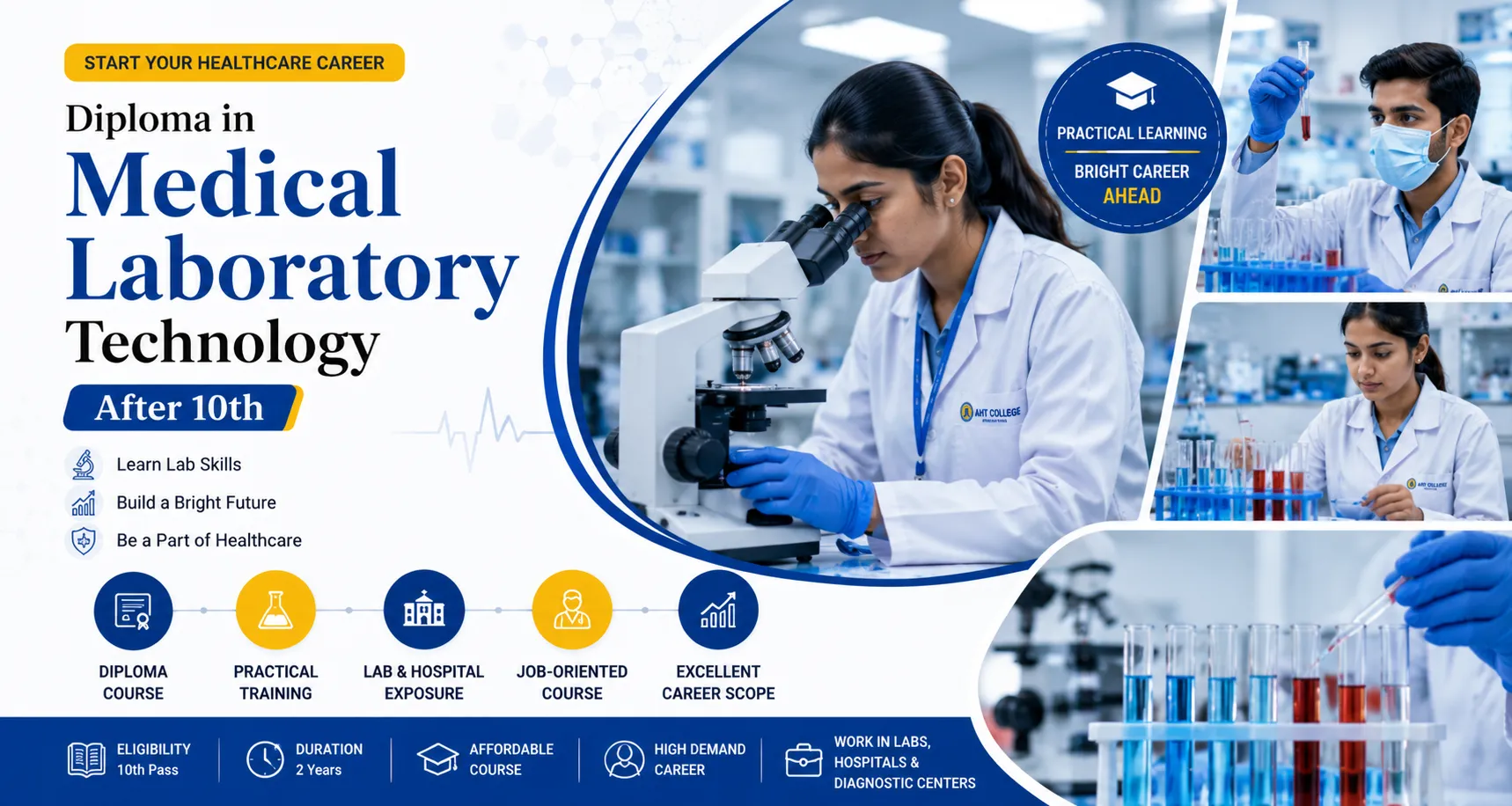
Healthcare is one of the few industries that never stops hiring and among the many entry points into this field the diploma in medical laboratory technology after 10th stands out as one of the fastest and most practical options for students. Not every student wants to wait until after 12th grade to begin their career journey and for those who want an early start this diploma offers a clear path into a stable and respected profession. It combines short duration with strong job relevance which makes it especially appealing for students coming straight out of secondary school.
This guide covers everything a student needs to know about pursuing a diploma in lab technician after 10th including eligibility course structure subjects covered career opportunities and how to choose the right institute for this program.
What Is Medical Laboratory Technology
Medical laboratory technology is the branch of healthcare that deals with collecting testing and analyzing blood urine tissue and other biological samples to help doctors diagnose diseases and monitor treatment progress. Every hospital clinic and diagnostic center depends on lab technicians to run accurate tests quickly and safely. Without this support system doctors would not be able to confirm diagnoses or track how well a patient is responding to treatment.
A lab technician works behind the scenes but the role carries real responsibility. Accuracy matters because a single test result can shape an entire treatment plan. This is why the diploma in medical laboratory technology after 10th focuses heavily on building precision and discipline right from the beginning of the course.
Why Choose This Diploma Right After 10th
Many students assume they need to complete 12th grade before entering the medical field but that is not always true. A diploma in lab technician course after 10th allows students to start building practical skills much earlier which gives them a head start compared to peers who wait longer to begin their healthcare journey. This path is particularly useful for students who know early on that they want a career in healthcare but may not want to commit to a long degree program right away.
Choosing this route also makes financial sense for many families. Diploma programs after 10th typically cost less than degree programs and take less time to complete which means students can start earning an income sooner. Once working many students choose to pursue further studies while continuing their job which allows them to grow their qualification without pausing their career.
Since there are several early entry healthcare programs to consider at this stage students should not limit themselves to just one option. Reviewing the complete list of paramedical courses after 10th can help students compare lab technology against other specializations in terms of duration cost and career scope before making a final decision.
Eligibility for Lab Technician After 10th
The eligibility criteria for this diploma is straightforward and designed to be accessible. Students who have passed their 10th grade examination from a recognized board with a minimum required percentage set by the institute are generally eligible to apply. Some colleges may prefer students who studied science subjects at the secondary level though this is not always mandatory since the diploma itself covers the foundational science knowledge needed for lab work.
There is usually no upper age limit for this course which makes it accessible even to students who may have taken a break after 10th grade before deciding to pursue a healthcare career. Admission is often based on merit though some institutes may conduct a basic aptitude test or personal interview before granting admission.
Course Duration and Structure
The diploma in medical laboratory technology after 10th typically runs for a duration of one to two years depending on the institute and the specific curriculum they follow. The course is divided into theoretical classroom learning and hands on practical training which is essential for this field since lab work depends heavily on correct technique.
During the program students learn subjects such as basic anatomy and physiology clinical biochemistry hematology microbiology pathology and laboratory safety protocols. They are trained to operate laboratory equipment such as microscopes centrifuges and automated analyzers and they learn how to collect samples properly store them safely and process them accurately.
Most reputed institutes also include an internship or hospital attachment component toward the end of the course. This gives students real exposure to a working lab environment before they graduate which significantly improves their confidence and job readiness. Colleges that maintain strong ties with hospitals and diagnostic centers tend to offer better internship placements which is worth checking before enrolling.
Skills You Will Gain
Beyond the technical knowledge this diploma also builds a set of practical skills that employers look for. Students develop attention to detail since even small errors in sample handling can affect test outcomes. They learn to follow strict hygiene and safety protocols which is critical in any medical setting. Time management becomes second nature since labs often handle a high volume of samples that need to be processed within specific windows.
Communication skills are also part of the training since lab technicians frequently interact with patients during sample collection and need to explain procedures clearly and calmly. These combined skills make graduates well rounded professionals who are ready to step into a working environment from day one.
Career Opportunities After the Diploma
Once a student completes their diploma in lab technician after 10th a wide range of career opportunities open up. Graduates can work as lab technicians in government hospitals private hospitals diagnostic chains pathology labs and blood banks. Some choose to work in research laboratories or pharmaceutical companies where quality testing is a major part of daily operations.
Many graduates start their career and then pursue additional certifications or a bachelor degree in medical laboratory technology while working which allows them to move into supervisory roles over time. Experienced lab technicians often go on to manage entire lab departments or even start their own diagnostic centers once they have built enough industry experience and professional connections.
Salaries for entry level lab technicians are competitive for someone starting right after a short diploma and they tend to grow steadily with experience and additional qualifications. The demand for trained lab technicians remains strong because diagnostic testing is a core part of nearly every medical treatment which means job security in this field is generally high.
Choosing the Right Institute
Not all diploma programs are created equal and the quality of training a student receives can significantly affect their career outcomes. When comparing institutes students should look at factors such as the quality of lab equipment available for practical training the qualification of faculty members and whether the college has strong partnerships with hospitals for internships and placements.
Location also plays a role since access to a well established healthcare hub can improve exposure to real world lab environments during the course. Students based in or around the capital region can explore paramedical courses in delhi ncr where several institutes offer strong hospital tie ups and updated lab facilities that support hands on learning throughout the program.
Tips for Success in This Field
Success as a lab technician depends heavily on consistency and a genuine interest in scientific accuracy. Students who do well in this field are the ones who stay curious about how tests work and why certain results matter for patient care. Building strong habits early such as maintaining clean and organized workspaces and double checking every sample label can set a student apart even during their training period.
Staying updated with new lab technologies is also important since diagnostic equipment continues to evolve. Technicians who take the initiative to learn new machines and testing methods tend to advance faster in their careers compared to those who rely only on what they learned during their diploma.
Conclusion
A diploma in medical laboratory technology after 10th offers a practical and accessible entry point into the healthcare industry for students who want to start their career early. With a manageable course duration hands on training and strong job demand across hospitals and diagnostic centers this path provides a solid foundation for a long and stable career. Students who research their options carefully choose a reputed institute and stay committed to building their practical skills can look forward to a rewarding future in this essential field of healthcare.