
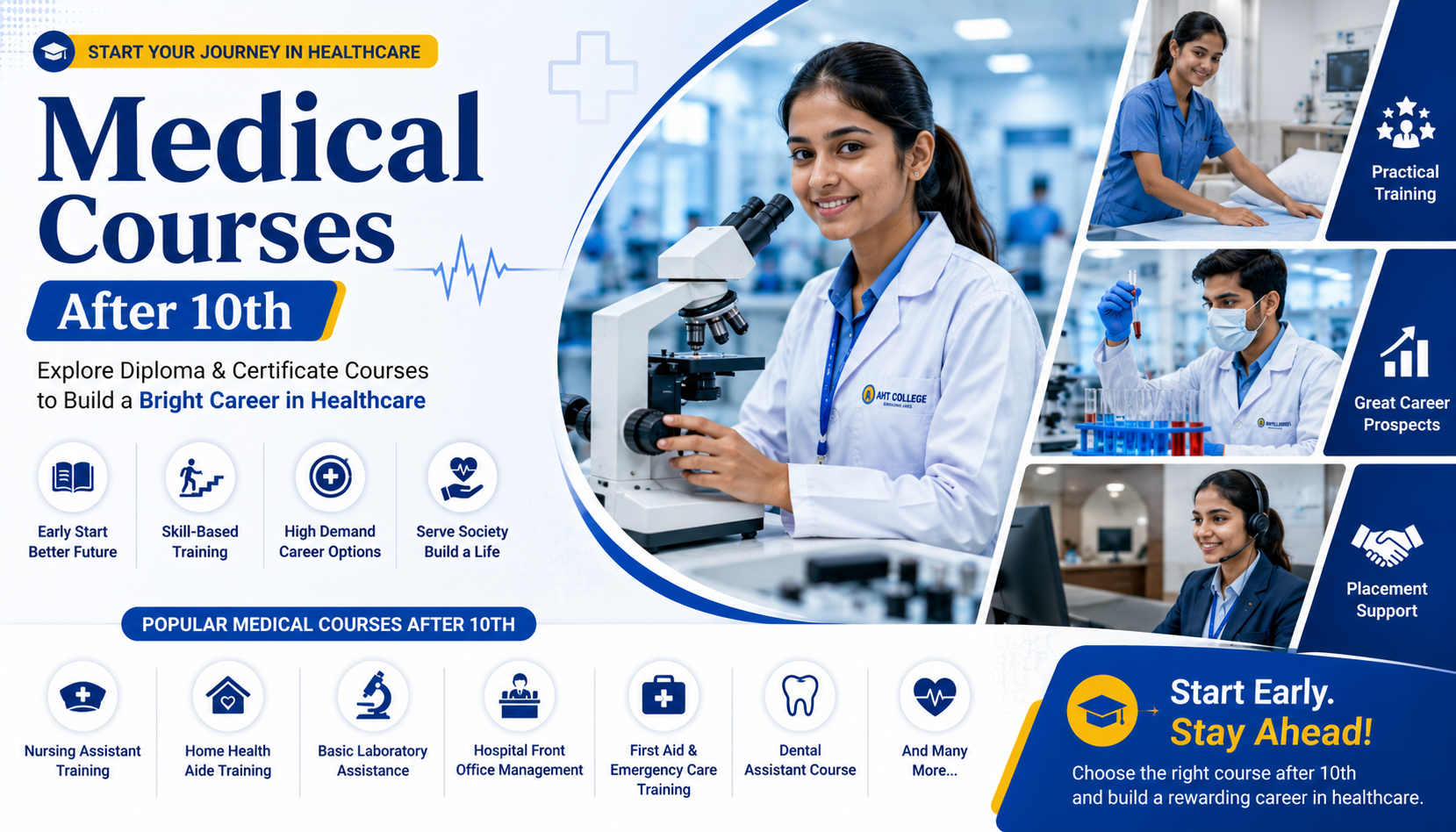
Not every student wants to wait until after 12th grade to step into the healthcare field. A growing number of students today are exploring medical courses after 10th because they want to start building practical skills early and enter the workforce sooner without spending years in a long academic program. This shift makes sense when you look at how the healthcare industry operates. Hospitals clinics and diagnostic centers need a steady supply of trained support staff and many of these roles do not require a full degree to get started. For students who are clear about their interest in healthcare choosing an after 10th medical course can be one of the smartest early career decisions they make.
This guide walks through everything a student needs to know about pursuing medical courses right after 10th grade including available options eligibility course structure and long term career potential.
Why Consider Medical Courses Right After 10th
Choosing an after 10th medical course is not about rushing into a career. It is about using time wisely. Students who know early on that they want to work in healthcare can begin their training years before their peers who wait until after 12th grade or even after a full undergraduate degree. This head start allows them to gain hands on experience while others are still finishing their general education.
There is also a practical financial angle here. Courses at this stage are usually shorter and more affordable compared to degree programs which means students can start earning an income much sooner. Many students use this early start as a stepping stone. They begin working in a healthcare support role and then continue their education part time or through distance learning while gaining real world experience at the same time. This combination of early income and continuous learning is one of the biggest reasons why this path continues to grow in popularity.
Who Should Choose This Path
Medical courses after 10th are best suited for students who already know they enjoy working in a healthcare environment or who show strong interest in biology and human health during school. Students who prefer practical hands on learning over long theoretical study often find this route more engaging since these courses focus heavily on real skills from day one.
This path also works well for students from families where a shorter and more affordable course makes more financial sense than a long degree program. It does not mean the career ceiling is lower. Many students who start with a short course after 10th eventually pursue higher qualifications later and move into senior roles within hospitals and diagnostic centers.
After 10th Medical Courses List
When students search for an after 10th medical courses list they are usually trying to understand the full range of options available so they can compare and choose based on their interest and career goals. Some of the most recognized courses at this stage include the following areas of study.
Nursing assistance training prepares students to support nurses and doctors in patient care duties within hospitals and clinics. This is one of the most in demand entry level healthcare roles since patient care support is needed around the clock in every medical facility.
Home health aide training focuses on caring for elderly or recovering patients in a home setting which has become increasingly relevant as more families choose home based care for aging relatives.
Basic laboratory assistance courses introduce students to sample collection and simple lab procedures which serves as a strong foundation for those who may later pursue a full diploma in medical laboratory technology.
Hospital front office and medical record management courses train students to handle patient registration appointment scheduling and documentation which are essential administrative functions in every hospital and clinic.
First aid and basic emergency care training teaches students how to respond to common medical emergencies which is valuable both as a standalone skill and as a foundation for further study in emergency medical technology.
Dental assistant training prepares students to support dentists during procedures and manage patient care in dental clinics which is a growing field as private dental practices continue to expand.
After 10th Medical Diploma Courses List
While many after 10th options are short certificate programs there is also a solid after 10th medical diploma courses list for students who want a slightly longer and more structured qualification. Diploma programs at this stage typically run for one to two years and offer deeper training compared to short certificate courses.
Popular diploma options include a diploma in medical laboratory technology a diploma in operation theatre assistance and a diploma in patient care management. These programs combine classroom learning with supervised practical training often including an internship period at a partner hospital or clinic. Choosing a diploma over a short certificate course can be a good decision for students who want stronger credentials before entering the job market or who plan to eventually pursue a full paramedical degree later in their career.
Diploma Courses After 10th in Medical Field
Students exploring diploma courses after 10th in medical field should pay close attention to how each program is structured since quality varies significantly between institutes. A good diploma program should offer a balance of theoretical knowledge and practical exposure. Simply memorizing textbook material is not enough in healthcare since real world situations require applied skill and confidence.
When evaluating a diploma program students should check whether the institute has updated lab equipment for practical sessions and whether faculty members bring real industry experience to their teaching. It is also worth confirming whether the program includes a hospital placement or internship component since this practical exposure often makes the biggest difference when it comes time to apply for jobs after graduation.
Students who are still exploring which specific specialization suits them best can review the complete range of paramedical courses after 10th to compare course duration eligibility and career scope across different fields before making a final decision.
Career Scope After Completing These Courses
One of the strongest arguments in favor of pursuing medical courses after 10th is the consistent demand for trained support staff across the healthcare sector. Government hospitals private hospitals nursing homes diagnostic centers and home care agencies are all regularly hiring for entry level roles that these courses prepare students for.
Graduates typically start in support roles and then build experience over a few years. Many go on to pursue additional certifications or diploma upgrades which open doors to more advanced and better paying positions. Some eventually move into supervisory roles within their department while others use their early healthcare experience as a foundation to pursue a full paramedical degree later on.
Salary at the entry level depends on the specific role and employer but the field offers steady growth potential as students gain experience and additional qualifications. The healthcare industry also tends to remain stable even during broader economic slowdowns which adds another layer of security for those choosing this career path.
How to Choose the Right Course and Institute
With so many options available choosing the right course can feel overwhelming. The first step is honest self reflection. Students should think about whether they prefer working directly with patients or whether they are more interested in administrative or lab based work since different courses cater to different strengths and interests.
Next students should research the institute carefully. A good college will have modern training facilities experienced faculty and strong relationships with local hospitals for practical exposure. Location matters too since studying near a well developed healthcare hub can improve access to quality internships and job opportunities after graduation. Students based near the capital region can look into paramedical courses in delhi ncr where several institutes offer strong hospital partnerships and updated training facilities suited for early stage healthcare students.
Conclusion
Medical courses after 10th offer a genuine and practical entry point into one of the most stable industries in the world. From short certificate programs to structured diploma courses students have several paths to choose from depending on their interest and long term goals. Starting early gives students a real advantage since they gain hands on experience and confidence years before many of their peers even begin their healthcare journey. With careful research and the right institute a student who starts right after 10th grade can build a strong and rewarding career in healthcare over time.