
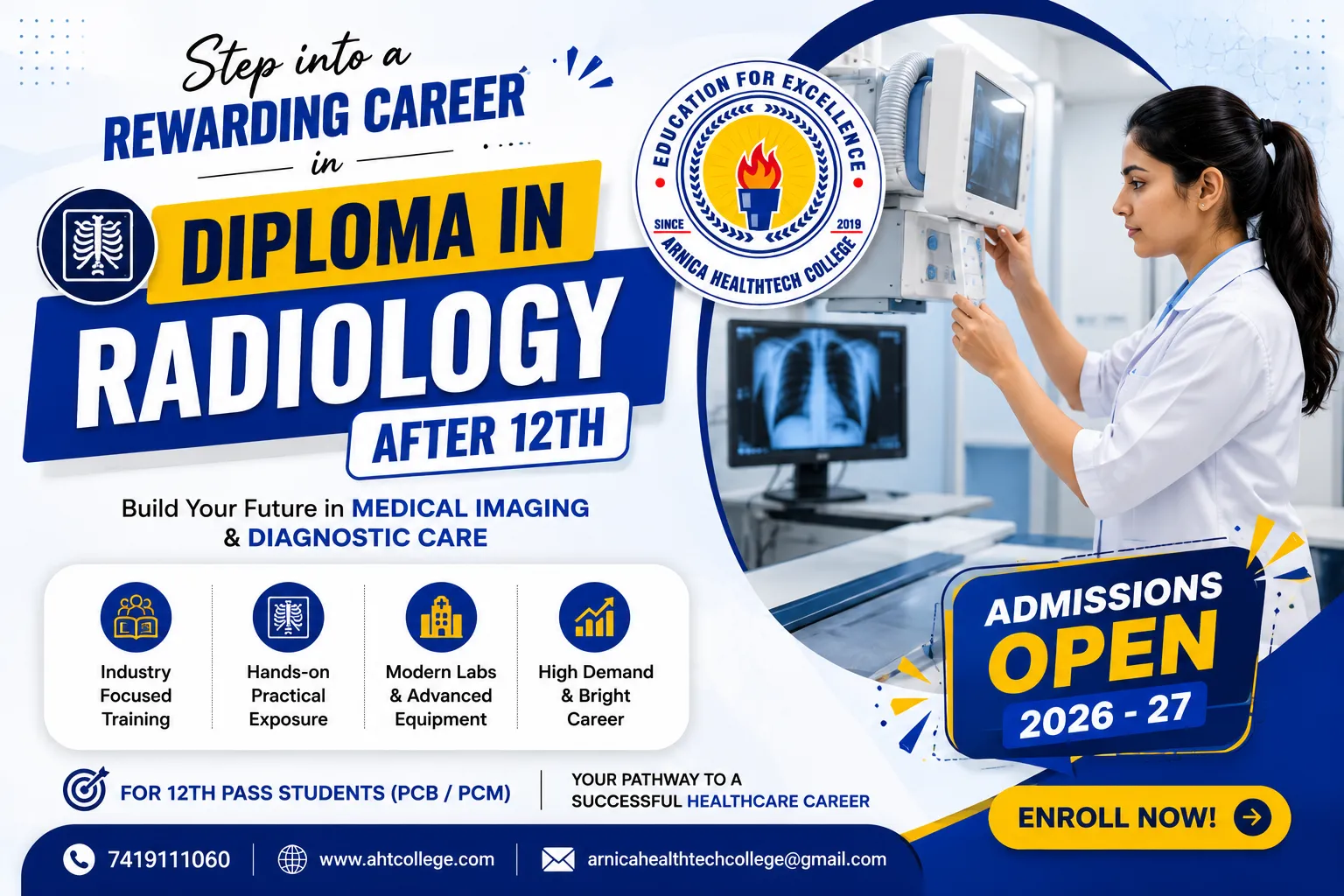
If you are someone who is fascinated by how doctors look inside the human body without ever making a cut, radiology might be the career for you. A diploma in radiology after 12th is one of the fastest ways to enter this field. It is shorter than a full degree, focused on practical, hands on training, and opens the door to jobs in hospitals and diagnostic centres soon after you finish the course.
In this blog, we will cover everything you need to know before choosing this course, including eligibility, duration, subjects you will study, and where a career in radiology can take you.
If you want personalised guidance on admission, fees or which college is right for you, feel free to send an enquiry and our counsellors will help you sort it out.
What Is a Diploma in Radiology?
A diploma in radiology, sometimes called a diploma in radiography or radio diagnosis technology, trains students to operate imaging equipment such as X-ray machines, CT scanners, MRI machines and ultrasound devices. Radiology technicians work closely with radiologists and doctors, capturing clear images that help detect fractures, tumours, infections and other internal conditions that cannot be seen from the outside.
Unlike a full radiology degree, which can take three to four years, a diploma course is built to get you working sooner. It focuses less on deep theory and more on practical skills like patient positioning, radiation safety, and operating and maintaining imaging machines.
Why Radiology Is a Growing Field
Medical imaging has become one of the most relied upon tools in modern healthcare. Almost no diagnosis today happens without an X-ray, scan or ultrasound at some point. As hospitals and diagnostic chains expand across cities and towns, the demand for trained radiology technicians keeps growing along with it, which makes this a fairly future proof career choice.
Eligibility for Diploma in Radiology After 12th
To apply for a diploma in radiology after 12th, most institutes require you to have completed your 12th standard with science subjects, particularly Physics, Chemistry and Biology. A minimum aggregate score, usually around 45 to 50 percent, is commonly required, though this can vary from one college to another.
Do You Need PCB or Is PCM Accepted Too?
While most colleges prefer students from the PCB group since the course involves human anatomy and physiology, some institutes are also open to students from a PCM background, especially for courses that lean more toward the technical and equipment side of radiology. It is always best to check the specific eligibility criteria of the college you are interested in before applying.
Age Limit and Other Requirements
There is generally no strict upper age limit for this diploma, which makes it accessible even for students who are exploring a career change. Some institutes may also ask for a basic medical fitness check, since the work involves handling equipment and being around patients regularly.
Diploma in Radiology Course Duration
Most diploma programs in radiology run for two years, though a few institutes offer a shorter one year certificate style option for students looking for the quickest possible entry into the workforce. The two year diploma is more widely recognised and tends to offer better career prospects, since it gives students more time for practical training and clinical exposure.
How the Course Is Structured
The diploma is usually divided into semesters, mixing classroom learning with hands on lab and clinical training. In the early stages, students focus on foundational subjects like anatomy and physiology. As the course moves forward, the focus shifts to imaging techniques, radiation physics and safety protocols, along with supervised practical sessions on actual imaging equipment.
Diploma in Radiology Syllabus
While the exact subjects can differ slightly between institutes, most diploma in radiology programs cover the following core areas:
- Human anatomy and physiology
- Radiographic and radiological physics
- Patient care and positioning techniques
- Radiation safety and protection
- X-ray, CT, MRI and ultrasound imaging techniques
- Image processing and quality control
- Clinical training and internship
Practical Training and Clinical Exposure
Radiology is a hands on field, and most of your learning will happen inside a lab or hospital setting rather than a classroom. Students get trained on real imaging equipment, learn how to position patients correctly for accurate scans, and practice reading and processing images under supervision. This practical exposure is what makes diploma holders job ready as soon as they graduate.
Career Scope After a Diploma in Radiology
Once you complete your diploma, a number of career paths open up in hospitals, diagnostic centres and imaging clinics. You can start as a radiology technician or radiographer, and with experience, move on to more specialised or supervisory roles.
Common Job Roles
- Radiology Technician
- X-Ray Technician
- CT Scan Technician
- MRI Technician
- Radiographer Assistant
- Imaging Centre Supervisor
Salary Expectations
Starting salaries for diploma holders are generally modest but steady, and they tend to rise with experience, additional certifications, and specialisation in areas like CT or MRI imaging. Technicians who build strong technical skills and gain a few years of clinical experience often move into better paying roles at larger hospitals or diagnostic chains.
Can You Study Further After a Diploma?
Yes. A diploma in radiology is not necessarily the final stop. Many students use it as a starting point and later pursue a bachelor's degree in radiology or medical imaging technology to widen their career options and qualify for higher paying, more specialised roles. If you already meet the eligibility for a degree level program, you might want to explore our BVoc in Radiology and Medical Imaging Technology, which combines vocational training with a formal degree.
Diploma vs Degree: Which One Should You Choose
If your goal is to start working as quickly as possible, a diploma is the more practical route. It is shorter, more affordable, and focused on the exact skills employers look for in entry level roles. On the other hand, if you are aiming for higher paying, more specialised positions down the line, a full degree program may serve you better in the long run. For a closer look at the diploma route specifically, you can check our dedicated page on the radiology course after 12th.
Choosing the Right Institute
When shortlisting colleges, look beyond just the course duration and fees. Check whether the institute has proper imaging equipment for practical training, tie ups with hospitals for clinical exposure, and a good track record of placements. This makes a real difference in how prepared you are once you step into the job market.
If you are also exploring other options in the medical field, our guide on paramedical courses after 12th can help you compare radiology with other diploma programs before you make your final decision.
Is a Diploma in Radiology Right for You?
If you are comfortable working with technology and machines, have an interest in the medical field, and want a career that gets you into the workforce quickly, a diploma in radiology after 12th is worth serious consideration. It gives you a specialised, in demand skill set, a manageable course duration, and a fairly clear path into hospitals and diagnostic centres soon after graduation.
Still deciding between a diploma and a degree, or want help shortlisting colleges? Send an enquiry and our counselling team will guide you through it.